Paint Protection Film · Albuquerque
Rock chips stop at the film.
If you commute on I-25 or I-40, you already know what a gravel truck does to a front bumper. Paint protection film is a clear urethane layer that takes the hit instead of your paint — and light scratches in it close back up in the sun.
Why front ends look old first
Look at any five-year-old car in this city and the damage is in the same four places. It's not bad luck — it's physics and road surface.
Interstate gravel
I-25 and I-40 carry constant construction and gravel haulers. At 70mph a stone off the truck ahead has more than enough energy to go through clear coat and into primer.
Chips become rust
A chip isn't cosmetic once it reaches metal. Water gets under the edge of the paint and it starts lifting from the inside out.
Repaints never quite match
A resprayed bumper is visible in the right light for the life of the car, and it's the first thing an appraiser looks for. It also flags on a vehicle history report.
Bugs and tar etch
Splatter left through a hot afternoon etches clear coat. On a front bumper that's a weekly event in summer.
Chips aren't random.
Look at any five-year-old car in this city and the damage is in the same handful of places. That's what decides how much film you actually need.
- 01Front bumperTakes the most, by a wide margin.
- 02Leading edge of the hoodCatches almost everything that clears the bumper.
- 03MirrorsSmall, exposed, and expensive to repaint.
- 04HeadlightsSandblasting hazes the lens — a safety issue, not just cosmetic.
- 05A-pillars & roof edgeHighway miles at speed.
- 06Rockers & behind the wheelsEverything the front tyres throw backwards.
How much coverage do you need?
Coverage is the only real decision here. We'll walk the car with you and point at exactly what's getting hit — then quote what solves it.
Partial front
The common-sense option
Bumper, the leading section of the hood, and the mirrors. Covers where the overwhelming majority of chips land, at the lowest cost. The trade-off is a film edge across the hood, which is visible up close on some colours.
Best for: Daily drivers, leased cars, anyone chip-shy on a budget
Full front
What most people choose
The whole hood, the whole front bumper, both front fenders and the mirrors. No line across the hood, and everything that faces forward is covered. This is the option that actually solves the problem.
Best for: Highway commuters, new cars, dark paint that shows chips
Track / extended
For hard use
Full front plus rocker panels, A-pillars, roof leading edge and the areas behind the wheels that catch thrown debris.
Best for: Track days, canyon driving, long-distance highway cars
Full body
Maximum
Every painted panel. The car stays essentially as-delivered underneath for as long as the film is on it.
Best for: Exotics, collectibles, anything you intend to keep
What you're actually buying.
It absorbs the impact
Urethane is thick and elastic. Stones that would have chipped paint bounce off the film instead — that's the whole product in one sentence.
Light scratches disappear
Modern film is self-healing. Swirls and fine scratches in the film close up with heat, whether that's a hot afternoon or warm water from a hose.
You shouldn't be able to see it
Cut to the panel and wrapped around the edges where the panel allows, film should be invisible at arm's length. Visible seams across the middle of a hood are an install problem, not a film problem.
The paint underneath stays original
Film comes off years later leaving factory paint. Original paint is worth real money at resale, especially on anything enthusiast.
Coverage matched to how you drive
You don't need a full body wrap to solve a rock chip problem. Most people's answer is the front end — and we'll say so rather than quoting the biggest number.
It stacks with a coating
A coating on top of film keeps the film slick, easier to clean and better protected from staining. The two are complementary, not alternatives.
What film will and won't stop.
What it does
- Stop rock chips and road debris damage
- Absorb scratches that would otherwise reach paint
- Self-heal light swirls with heat
- Come off later leaving original paint
- Protect against bug and tar etching
What it doesn't do
- Prevent dents or damage from a real collision
- Make paint scratch-proof
- Stay invisible if it's installed badly
- Replace a ceramic coating's chemical resistance
- Go on well over damaged or chipped paint — that gets fixed first
Still deciding between film and a ceramic coating? They solve completely different problems — and plenty of people need both.
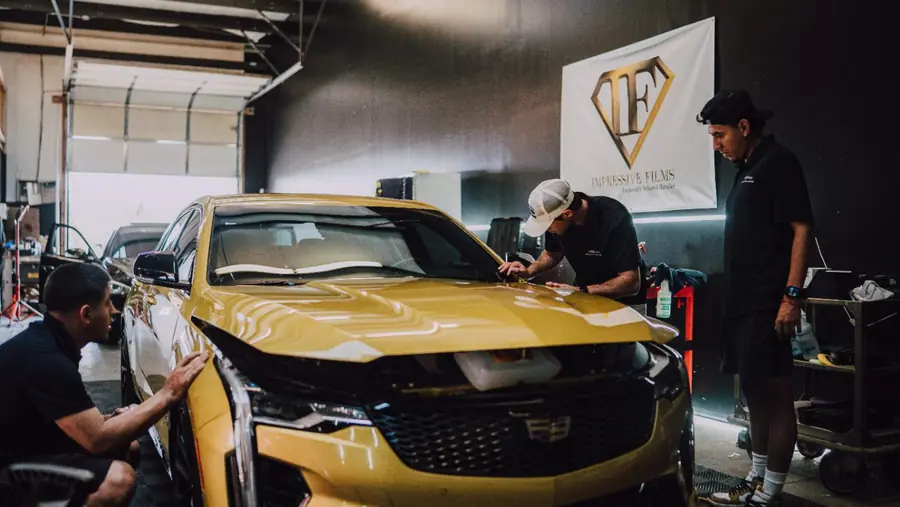
PPF vs ceramic coatingReal installs, in our bay.
What film costs.
Our standard coverage by vehicle size. Extended and full-body coverage is quoted per car, because no two are the same shape.
The films we install are HiTek and Impressive Films.
Free quote
Get a PPF quote
Tell us the car and how you drive it. Photos of the front end help us quote coverage accurately.
- We'll recommend coverage, not the biggest invoice
- Existing chips pointed out before we start
- A flat price and honest timescales
What's in every film job.
- Paint washed, decontaminated and inspected before anything goes on
- Existing chips and defects pointed out before we start, not after
- Film cut to your exact model's pattern
- Edges wrapped wherever the panel allows
- Installed indoors to keep dust out of the adhesive
- A follow-up look a week or two later once everything has settled
How an install runs.
- 01
Walk the car
We look at what's already chipped and where. That decides the coverage worth quoting.
- 02
Pick coverage
Partial front, full front, extended or full body — matched to how and where you actually drive.
- 03
Prep the paint
Film magnifies whatever is under it, so the paint gets properly cleaned and decontaminated first.
- 04
Install indoors
Panels are laid wet, squeegeed out and the edges wrapped. This takes as long as it takes.
- 05
Settle and re-check
Any remaining moisture clears over the following days. Bring it back and we'll look it over.
What people ask about film.
Impact and abrasion: rock chips, road debris, bug etching, sand, light scratches and car-wash marring. It is not body armour — it won't help in a collision or stop a door ding.
Old films did. Current top-tier urethane is made not to, and quality film carries a manufacturer warranty covering yellowing and cracking. We'll give you the specific warranty document for the film we quote so you have it in writing rather than taking our word for it.
It shouldn't be, at normal viewing distance. Where you may see it is at the edges of a partial coverage package — that hood line is the main reason people upgrade to full front.
After the first week, yes. Hand wash or touchless is best. Avoid pressure-washing straight at an edge, which is the one thing that can lift film.
Film for physical damage, coating for chemical damage. If rock chips are your problem, no amount of coating will help — you need film. Many customers do both: film on the front, coating over everything.
We can, but the chips stay visible under the film and get sealed in. If the front end is already marked, talk to us about correcting or touching in first — it's the difference between hiding a problem and fixing it.
Longer than people expect. A full front is a multi-day job done properly, and full body is longer again. We'd rather quote you honest days than rush a panel.
Often done alongside
- Ceramic CoatingA bonded layer that makes paint easier to clean, harder to stain, and noticeably glossier for years.
- Window TintCeramic and carbon film that cuts the heat, kills the glare, and gives the glass a clean factory look.
- Auto DetailingInterior deep cleans and exterior correction that make a car feel genuinely looked after again.
Stop the next chip before it happens.
Send us a photo of your front end and how you drive it. We'll tell you what coverage actually solves it.
3500 Vista Alameda NE, Suite A, Albuquerque, NM 87113
Mon–Sat, 10:00 AM – 6:00 PM